

Solar Battery Installation Rules in Queensland
Posted on 15 October 2025
Solar Battery Installation Rules for Rockhampton & Yeppoon Homes
As more Queensland households make the switch to renewable energy, we’re seeing battery storage become an essential part of modern solar systems. But before installing a battery, it’s important to understand the regulations that apply across Queensland — covering everything from placement and safety barriers to clearances around gas fittings and exits.
At EcoSmart Solar, we follow strict Australian Standards and Queensland electrical safety requirements to ensure every battery is installed correctly — safely positioned away from heat sources, gas equipment, and escape routes. These rules aren’t just about compliance; they’re about keeping your home safe and ensuring your system performs reliably through Rockhampton’s hot summers, humid conditions, and the region’s everyday energy demands.
Read This First
All battery installations in Queensland must comply with AS/NZS 5139:2019 and AS/NZS 3000:2018 (Wiring Rules).
Oversight comes from the Electrical Safety Office (ESO) under Workplace Health and Safety Queensland, along with Energy Queensland and Ergon Energy for grid-connection requirements.
These standards and authorities set out where you can and cannot install a battery, the distances to maintain from doors, windows, and gas fittings, and what materials to use if the battery backs onto a habitable room.
The aim is straightforward: place the battery where it can’t be damaged, overheated, or block an exit, and keep it safely separated from living areas and ignition sources.
Where a Battery Must Not Be Installed
Before deciding on a location, Queensland has clear restrictions to reduce the risk of fire, gas ignition, and impact damage. The rules below are based on AS/NZS 5139, the ESO’s installation guidance, and Ergon Energy’s service and installation rules for Rockhampton and Yeppoon properties.
Batteries must NOT be installed in:
- Hazardous areas as defined in AS/NZS 3000, including gas cylinder and relief-vent exclusion zones. Local gas suppliers may require additional clearance around meters.
- Escape routes, including passageways, walkways, and under stairs. Batteries must not obstruct exits or evacuation routes.
- Ceiling spaces, roof cavities, or recessed wall cavities, unless housed in a compliant non-combustible enclosure sealed to the cavity.
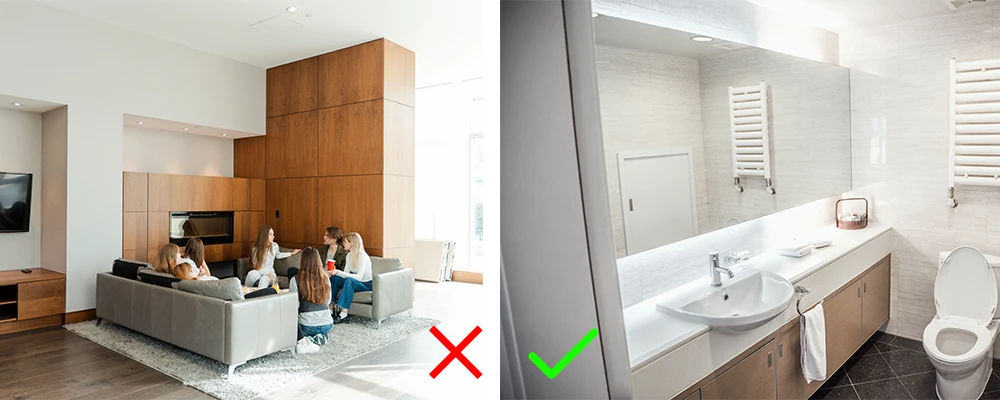
- Habitable rooms (bedrooms, living rooms, kitchens, dining rooms, studies, and similar). Batteries can only be installed in garages, outdoor areas, or purpose-built enclosures.
- Any area prone to water, dampness or direct weather exposure, unless the battery is IP-rated for outdoor use and mounted according to manufacturer instructions.
What Counts as a Habitable Room in Queensland?
The Queensland Building Code, aligned with the National Construction Code (NCC), defines a habitable room as any space used for daily living — such as bedrooms, living areas, dining rooms, studies or playrooms.
If the battery wall backs onto one of these rooms, you’ll need to install a non-combustible fire barrier or choose another external location.
Rule: A battery cannot be mounted directly on a wall shared with a habitable room unless a compliant barrier is fitted.
Minimum Distances from Openings, Exits and Appliances
These are the standard minimum clearances under AS/NZS 5139 and ESO guidance. Your installer must follow these and any stricter manufacturer requirements.
- Openable windows and vents:
Keep at least 600 mm horizontally and 900 mm below any openable window or vent into a habitable room. - Doors, exits and wide openings:
Do not install a battery within 600 mm of an exit up to 900 mm wide.
For garage or yard doors, allow enough space for a person to pass at least 1000 mm from the nearest edge of the battery. - Electrical appliances:
Keep unrelated appliances (e.g. air conditioner units, hot water systems, pumps) at least 600 mm horizontally and 900 mm above the battery. - Gas equipment:
Maintain gas separation zones per AS/NZS 3000 and local gas supplier (Ergon or Origin Energy) rules. Typically, maintain a 1000 mm radius around the gas vent and 1500 mm in the direction of discharge.
Fire Barriers for Walls Backing Habitable Rooms
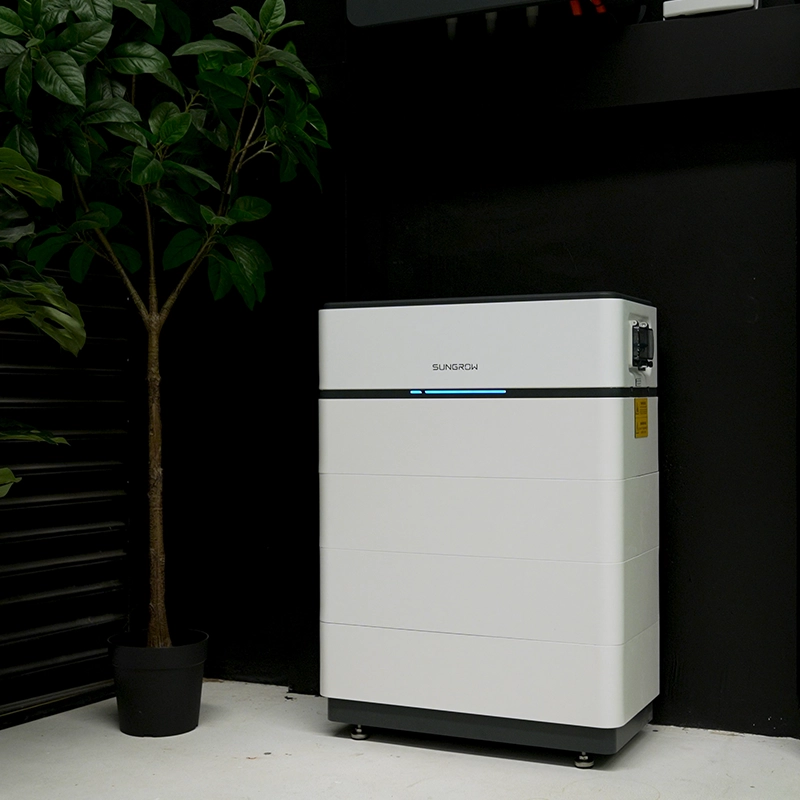
If the battery is mounted on or within 300 mm of a wall that backs onto a habitable room, Queensland’s Electrical Safety Office requires a non-combustible fire barrier.
Acceptable materials include:
- Brick or concrete
- Masonry block
- Compressed fibre cement sheet
- Ceramic or terracotta tiles
The barrier must:
- Extend 600 mm beyond each side of the battery
- Extend 900 mm above the top of the battery
- Protect the ceiling within 600 mm if the top of the battery is within 900 mm of it
- Be fully sealed, with no openings larger than 5 mm
Access, Egress and Impact Protection
Batteries must not restrict movement or block pathways. Queensland guidance recommends 1 metre of clear space around the battery to allow safe access.
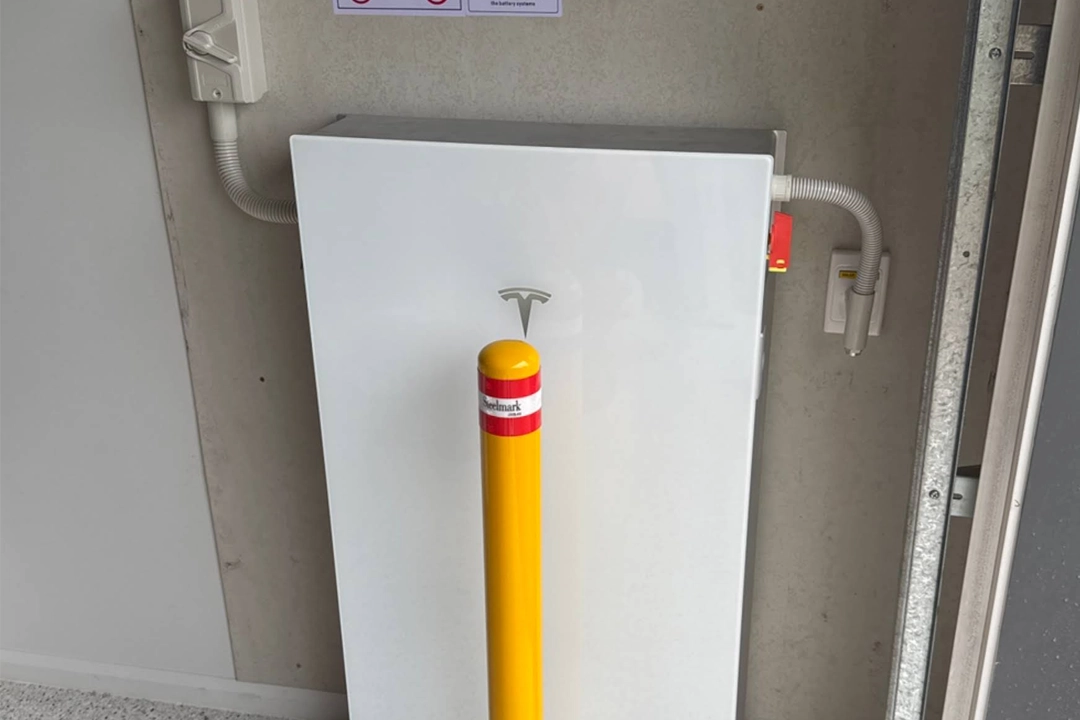
If the battery is installed in a garage or any area where a vehicle could hit it, bollards or a solid barrier are required.
When Are Bollards Required?
Whenever there’s a realistic chance of vehicle contact — such as in garages or driveways.
Compliant Bollards
While not size-prescriptive, the barrier must fully prevent impact. Common choices include fixed steel bollards, 70–100 mm diameter and around 900 mm high, anchored into the concrete slab and placed to protect the entire front face of the battery.
If the battery is outside a vehicle’s turning or parking zone, bollards are not required — but your installer should record that assessment.
Manufacturer Clearances Still Apply
AS/NZS 5139 sets the legal minimum, but each product manual lists its own airflow and service clearances.
For example, the Tesla Powerwall 3 requires:
- Left/right sides: ≥ 100 mm
- Above: ≥ 50 mm
- Below: ≥ 20 mm
- In front: ≥ 300 mm service space
- Between units: ≥ 100–150 mm
Indoor vs Outdoor Placement
For Rockhampton and Yeppoon homes, outdoor or garage placement is usually preferred, given the warm, humid climate. Indoor installations are generally discouraged in domestic settings and must meet all barrier and clearance requirements if used.
Other Compliance Steps for We Follow
- Test and verify the system to AS/NZS 3000 standards
- Label, earth and protect all wiring per AS/NZS 5139 Sections 4–6
- Meet inverter and PV requirements under AS/NZS 4777.1 and AS/NZS 5033
- Submit compliance documentation to Ergon Energy for grid-connection approval
Local Note for Rockhampton & Yeppoon Homes
Many homes in Central Queensland use single or three-phase power and may have large air conditioners, pools or EV chargers.
Plan battery size and location early to allow for future expansion, safe access, and easy maintenance. Check nearby gas meters, hot water units, and walkway widths before installation to avoid relocation later.
Why Choose EcoSmart Solar for Your Battery Installation
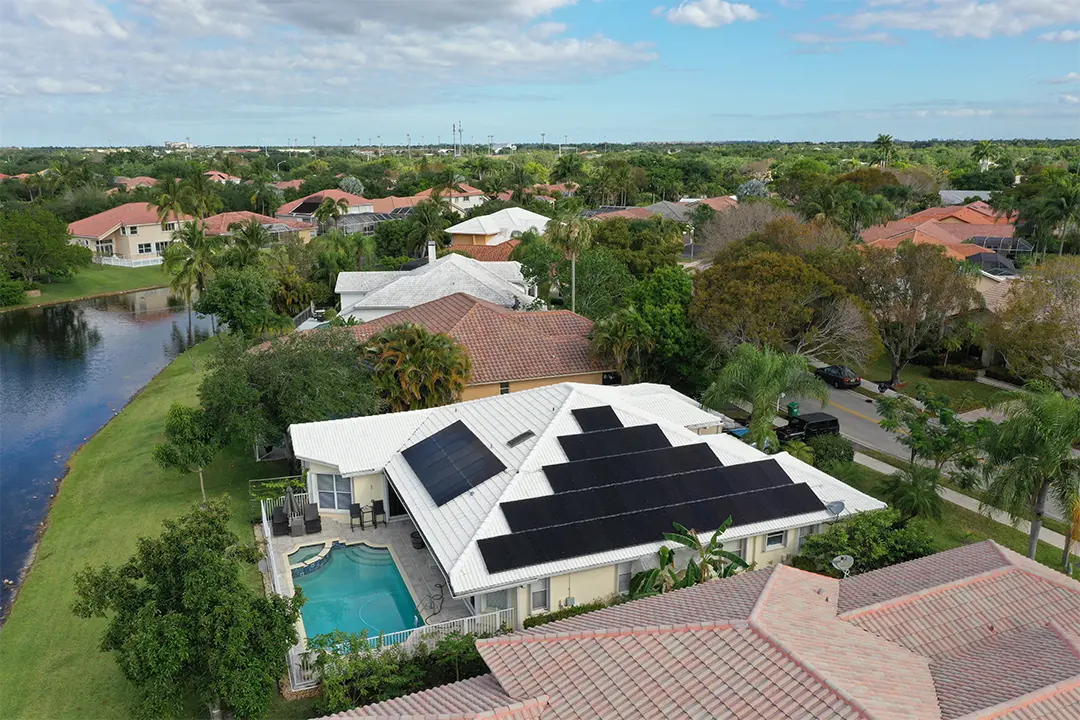
EcoSmart Solar has delivered safe, high-quality battery installations across Rockhampton, Yeppoon and Central Queensland, following all requirements under AS/NZS 5139, AS/NZS 3000, and the Queensland Electrical Safety Office.
Every installation is carefully planned and executed — with proper clearances measured, compliant fire barriers fitted where needed, and impact protection added in garages or driveways. At completion, you’ll receive full commissioning records, inspection photos, and warranty documentation for your peace of mind.
If you’re ready to install a battery system the right way, speak with EcoSmart Solar today. From site inspection to final sign-off, we take care of every detail so you can enjoy safe, reliable energy storage built for Queensland conditions.